
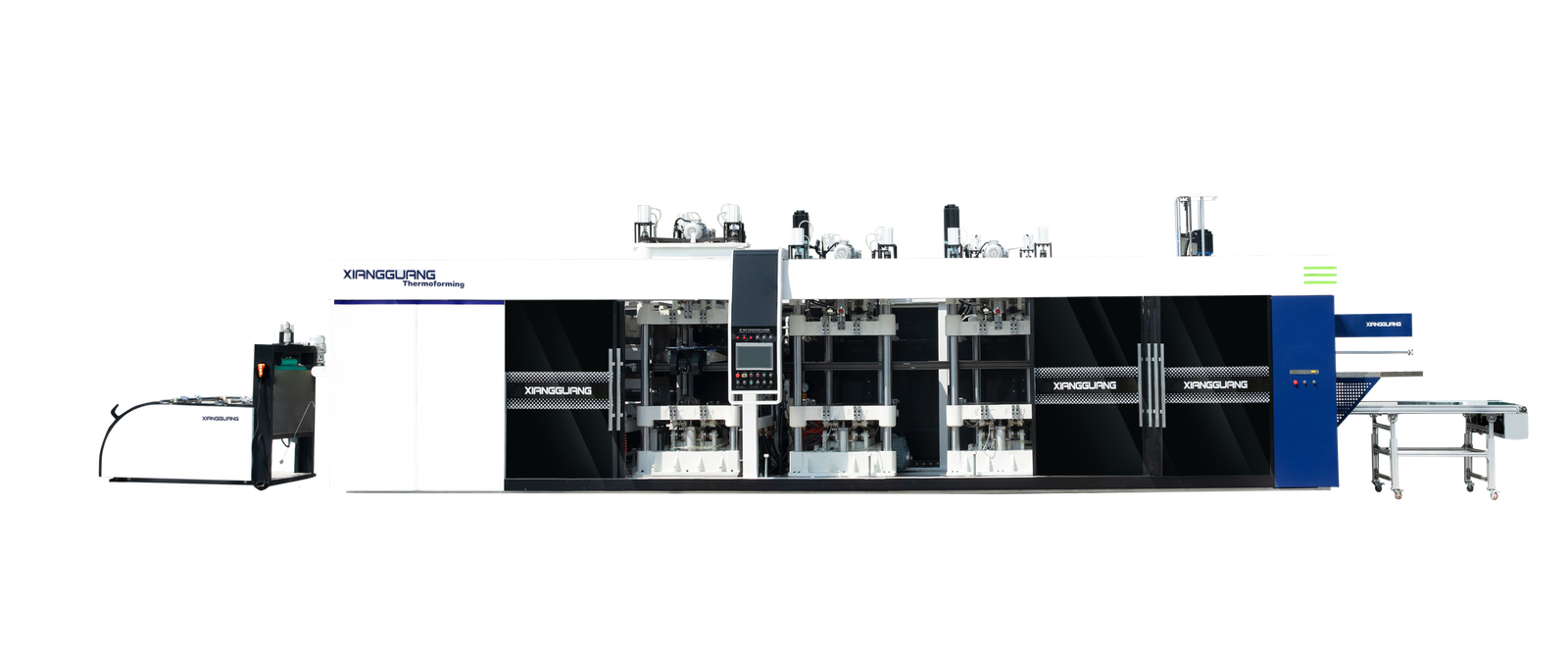
Understanding how to choose a thermoforming machine is important for any food packaging manufacturer. The machine must match the product shape, plastic material, production capacity, forming process and factory requirements. An unsuitable machine can result in inefficient production, increased material waste and difficulty achieving the required packaging quality.
This guide explains how to choose a thermoforming machine for manufacturing plastic food containers, cups, lids and trays. It covers product requirements, materials, machine configuration, production capacity, molds and after-sales support, helping manufacturers make a more informed investment decision.
What Is a Thermoforming Machine?
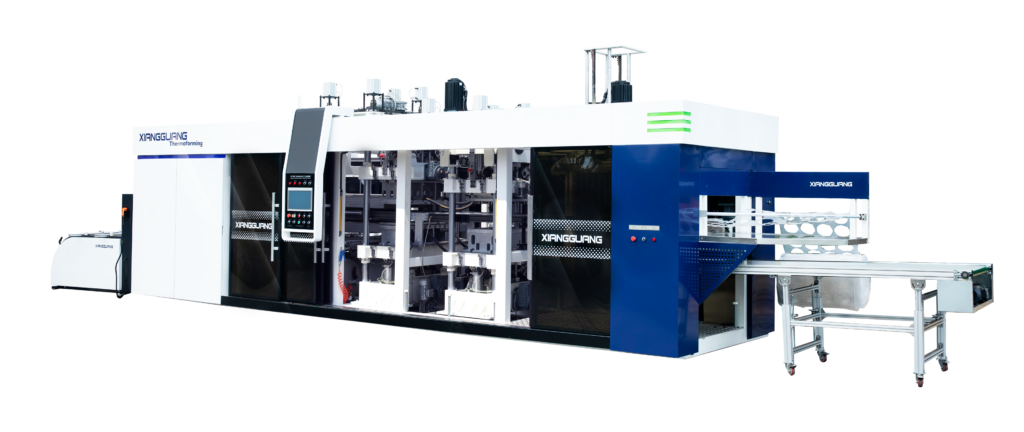
A thermoforming machine heats a plastic sheet until it becomes soft enough to be formed into a specific shape. The heated sheet is then formed against a mold using vacuum, air pressure or a combination of both. After forming, the product is cooled, cut and prepared for stacking or collection.
Thermoforming technology is widely used to manufacture plastic food containers, cups, lids, trays and other packaging products. Depending on the required product and production process, a production line may include forming, cutting, punching and automatic stacking stations.
Identify the Products You Want to Manufacture
The first step is to clearly identify the products you plan to manufacture. A machine designed for shallow food trays may require different forming specifications, molds and production settings from a machine used for deep cups or containers.
Before selecting a machine, prepare information about your intended products, including:
- Product type, such as containers, cups, lids or trays
- Product length, width and depth
- Number of compartments
- Required plastic material
- Sheet thickness
- Expected production capacity
- Product drawings, photographs or physical samples
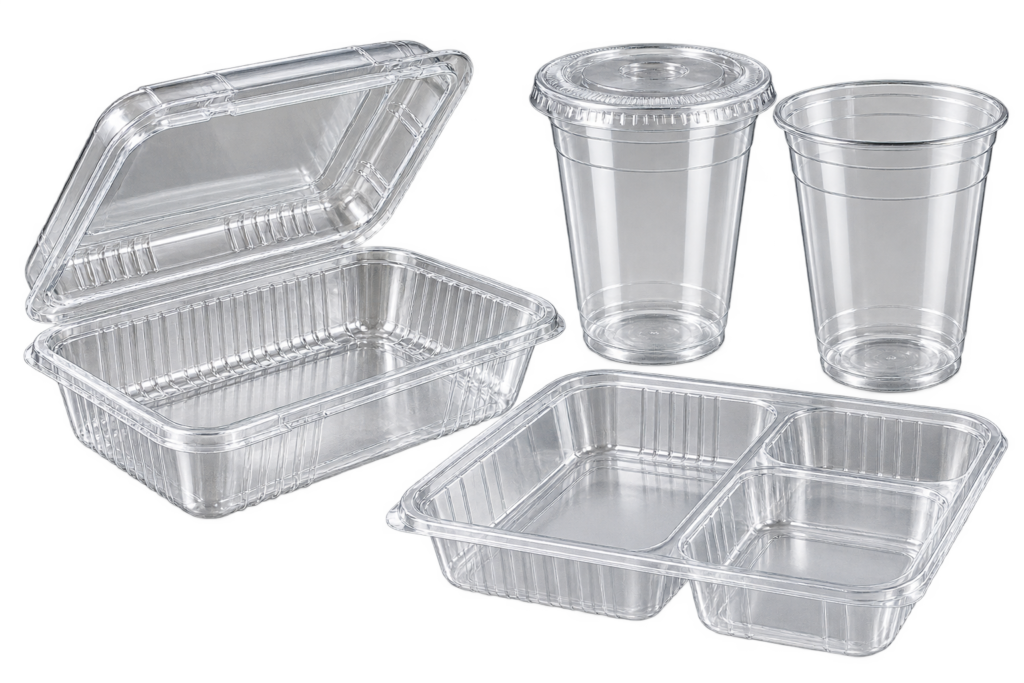
Providing this information allows the machine manufacturer to recommend a suitable forming area, forming depth, machine configuration and mold design.
Choose the Right Plastic Material
Plastic material selection affects the heating temperature, forming process, product performance and machine settings. Before choosing a thermoforming machine, buyers should confirm which materials they plan to process and the required sheet thickness. Common materials used for thermoformed food packaging include PP, PET and PS.
Polypropylene (PP)
PP is commonly used for food containers, cups and packaging products that require good heat resistance. When producing PP packaging, the machine’s heating system and forming controls must be suitable for the material’s processing characteristics
Polyethylene Terephthalate (PET)
PET is frequently used for transparent food trays, containers, lids and display packaging. Accurate temperature control and a suitable mold design are important for achieving clear and consistent PET products.
Polystyrene (PS)
PS is used for various disposable cups, trays and food-packaging products. The required machine settings will depend on the sheet thickness, product dimensions and expected production speed.
Buyers should provide the material type, sheet width and sheet thickness when requesting a quotation. This helps the manufacturer confirm the appropriate heating system, forming parameters and machine configuration. Material compatibility should always be verified against the technical specifications of the selected machine.
How to Choose a Thermoforming Machine Configuration
Thermoforming machines are available in different configurations depending on the product, material and required production process. Buyers should determine which operations need to be completed automatically, including forming, punching, cutting and stacking.
Three-Station Thermoforming Machine
A typical three-station thermoforming machine combines forming, cutting and stacking operations. This configuration can provide an automated production process for many types of food containers, trays and lids. The exact station arrangement may vary according to the machine design and product requirements.
Four-Station Thermoforming Machine
A four-station thermoforming machine includes an additional processing station, which may be used for punching or another required operation. This configuration can be suitable for products that require extra processing before cutting and stacking.
Vacuum and Positive-Pressure Forming
Vacuum forming uses vacuum pressure to draw the heated plastic sheet against the mold. Positive-pressure forming uses compressed air to help form the sheet with greater control. The appropriate forming method depends on the product shape, forming depth, material and required surface detail.
Before selecting a configuration, buyers should send their product drawings, samples and production requirements to the machine manufacturer. The manufacturer can then recommend the appropriate forming method, number of stations and tooling solution
Calculate the Required Production Capacity
Production capacity is another important factor when choosing a thermoforming machine. The required output depends on product size, mold-cavity quantity, cycle speed, material, sheet thickness and daily working hours. Buyers should not select a machine based only on its advertised maximum speed.
Before requesting a quotation, calculate the approximate number of products required per hour, day or month. Buyers should also consider future production growth so that the selected machine can support increas
- Required products per hour
- Number of working hours per day
- Number of working days per month
- Expected machine cycle speed
- Number of cavities in each mold
- Expected production capacity
- Required production efficiency
The machine manufacturer can use this information to recommend a suitable forming area, mold-cavity arrangement and machine model. Final production output should be confirmed through product drawings, material specifications and mold design
Check the Important Machine Specifications
Machine specifications should be carefully compared with the intended product and factory conditions. Buyers should not choose a model based only on price or production speed. The machine must support the required product dimensions, material and production process.
- Forming area: Determines the maximum mold size and product arrangement that the machine can accommodate.
- Maximum forming depth: Determines whether the machine can produce shallow trays, deep containers or cups.
- Applicable sheet width and thickness: Must match the plastic sheet required for the intended products.
- Heating system: Accurate temperature control is important for consistent material heating and forming.
- Cycle speed: Influences production capacity but can vary according to the product, material and mold.
- Power supply: The machine voltage, frequency and power requirements must match the buyer’s factory.
- Air and water requirements: Compressed air and cooling-water requirements should be confirmed before installation.
- Machine dimensions and weight: Buyers must ensure that the factory has sufficient installation space and a suitable foundation
- Request the complete technical specification sheet before placing an order. All specifications should be confirmed according to the final product, mold design, material and production requirements.
Consider the Mold and Forming Tools
The mold is a critical part of the thermoforming production process. Even when a suitable machine is selected, an unsuitable mold can affect product dimensions, appearance, material distribution and production efficiency. The machine and mold should therefore be designed as a complete production solution.
Mold design depends on the product shape, forming depth, material, sheet thickness, required output and number of cavities. Buyers should provide accurate product drawings or physical samples before mold production begins.
- Product drawing with accurate dimensions
- Physical product sample, if available
- Plastic material and sheet thickness
- Required number of mold cavities
- Cutting and stacking requirements
- Expected production capacity
- Product surface and appearance requirements
Buyers should also confirm whether the machine supplier can provide mold design, manufacturing, installation and production testing. Testing the machine with the final mold and material before shipment can help verify the complete production process.

Evaluate Installation and After-Sales Support
A thermoforming machine is a long-term industrial investment, so technical support is an important part of the purchasing decision. Buyers should confirm what assistance the supplier provides before, during and after machine installation.
Clear installation guidance and operator training can help the production team understand machine operation, routine maintenance and basic troubleshooting.
- Installation and commissioning guidance
- Operator and maintenance training
- Machine manuals and electrical diagrams
- Remote technical support
- Availability of spare parts
- Warranty terms and coverage
- Response time for technical problems
- On-site engineer support, if required
Buyers should request written details of the warranty and after-sales services before confirming an order. The available support should match the buyer’s location, technical experience and production requirements.
Information to Provide When Requesting a Quotation
To recommend a suitable thermoforming machine and prepare an accurate quotation, the manufacturer needs detailed information about the buyer’s product and production requirements. Providing complete information can reduce misunderstandings and make the machine-selection process more efficient.
- Product name and intended application
- Product photographs, drawings or physical samples
- Product length, width and depth
- Plastic material, such as PP, PET or PSSheet width and thickness
- Required production capacity
- Preferred machine configuration
- Factory voltage and frequency
- Destination country and delivery location
- Mold and auxiliary-equipment requirement
If some technical details are not yet available, buyers can begin by sending product photographs, dimensions, material information and expected output. The machine manufacturer can then discuss the remaining requirements and recommend a suitable solution.
Choosing the Right Thermoforming Machine
When deciding how to choose a thermoforming machine, buyers should consider product requirements, materials, production capacity, mold quality and after-sales support
Shanghai Xiangguang Technology Co., Ltd. provides thermoforming machines, molds and forming tools for plastic food containers, cups, lids, trays and other packaging applications. Our team can evaluate your product specifications and recommend a suitable machine and tooling solution.
Need expert advice on how to choose a thermoforming machine for your packaging production? Send us your product photographs or drawings, dimensions, plastic material, sheet thickness and required production capacity to request a quotation and feel free to contact us.